
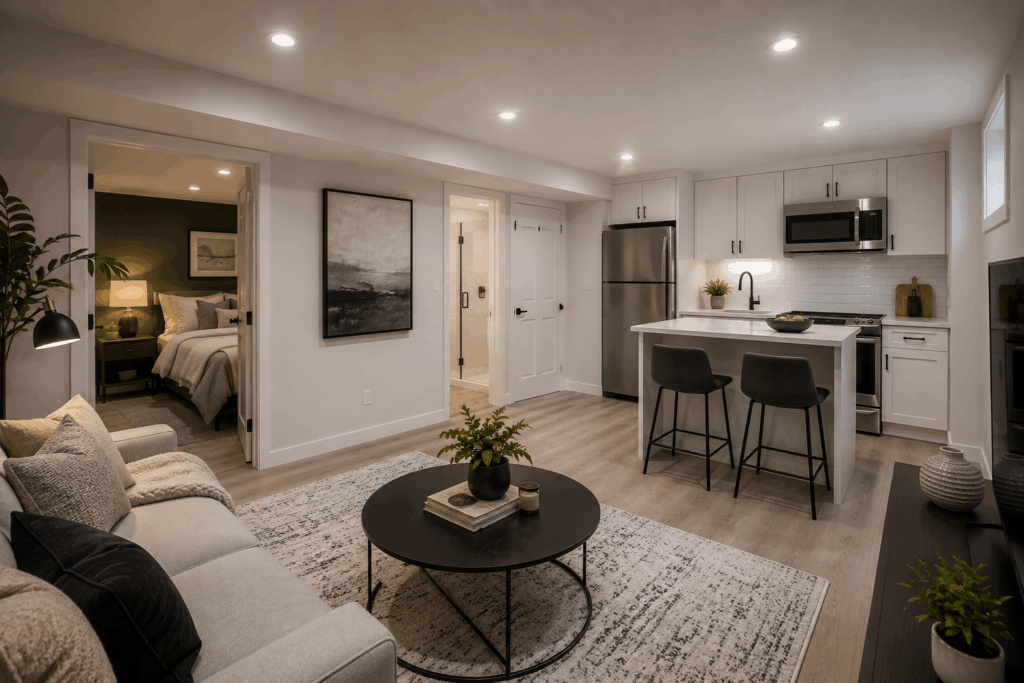
More Calgary homeowners are looking at their basements as more than extra living space. With rental demand strong across the city, a legal secondary suite can turn an underused basement into a meaningful source of income, while adding real resale value. But legal is the operative word. An illegal suite carries real risk, and the requirements that separate a legal suite from an illegal one are specific, code-driven, and non-negotiable. Here is what actually goes into getting it right.
What Makes a Basement Suite Legal
A legal secondary suite meets the City of Calgary’s safety code for a self-contained dwelling unit, has gone through the proper permit and inspection process, and is recorded on the city’s Secondary Suite Registry. An illegal suite might look identical from the inside, but it has skipped one or more of these steps, which can affect your home insurance, complicate a future sale, and put tenants at real risk in an emergency.
The Six Core Requirements
- A private entrance, separate from the main home’s entrance
- Egress windows in every bedroom, sized to meet code for emergency escape
- Fire-rated separation between the suite and the rest of the home
- A dedicated electrical sub-panel that serves only the suite
- Independent heating and ventilation for the suite
- A separate kitchen and bathroom, fully self-contained
The Permit and Registration Process
Building a legal suite typically involves a Development Permit, if your zoning requires one, followed by a Building Permit, along with separate electrical and plumbing permits for the related trade work. Inspections happen at multiple stages: framing, electrical and plumbing rough-in, and a final inspection, before your suite is added to the Secondary Suite Registry. Skipping the registration step is one of the most common reasons an otherwise well-built suite is still considered illegal.
Incentive Programs Worth Asking About
Beyond rental income, there are sometimes municipal or federal programs available to help offset the cost of building a legal secondary suite. These programs and the amounts they offer change over time, so rather than quote figures that may be outdated by the time you read this, we will walk you through whatever currently applies at your consultation.
Why Electrical and Plumbing Make or Break a Legal Suite Project
Of the six requirements above, two of them, the electrical sub-panel and the suite’s own plumbing, are where projects most often stall. Most renovation companies have to bring in outside electricians and plumbers for this work, which means extra scheduling and extra coordination on a project where code compliance is not optional. At Grade A Developments, our own licensed electricians and plumbers are part of the team from day one, so that coordination happens automatically.
Frequently Asked Questions
Q: Can I legalize an existing suite that was never permitted?
A: Often, yes. We can assess your existing suite and identify what is needed to bring it up to code, including any electrical or plumbing work.
Q: How long does the legal suite process take?
A: Permit approval and construction together typically take several months, depending on city processing times and the scope of work required.
Q: Do I need a Development Permit?
A: It depends on your property’s zoning. We confirm this as the first step in our process.
Q: What happens if my suite is built but never registered?
A: It is still considered illegal until it is registered with the city, regardless of how well it was built. We handle registration as part of every legal suite project.