
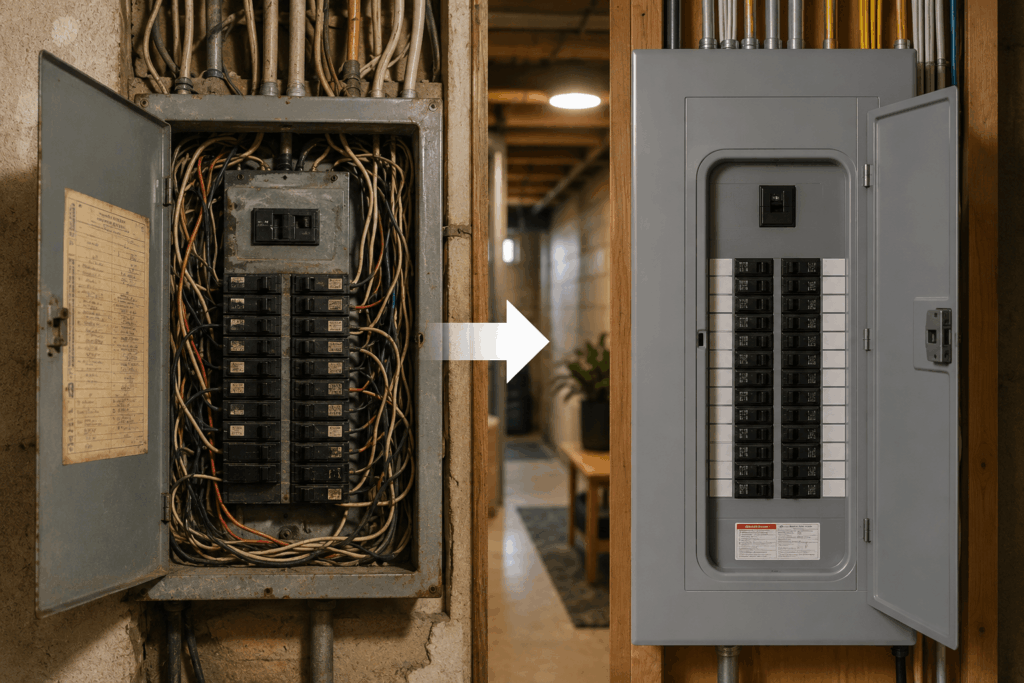
A lot of Calgary homes built before the 1980s are still running on their original electrical panel. Most of the time, it works fine, until it does not. Knowing the warning signs ahead of time means you can plan a panel upgrade on your own schedule, rather than dealing with it as an emergency.
Warning Signs Your Panel Is Outdated
- Breakers trip regularly, especially when running multiple appliances at once
- Lights flicker or dim when something else turns on
- Your panel still uses fuses instead of breakers
- The panel feels warm to the touch or you notice a buzzing sound
- You cannot add a new appliance, hot tub, or EV charger without an electrician telling you the panel cannot support it
Why Renovations Often Trigger a Panel Upgrade
Kitchen and basement renovations frequently add circuits for new appliances, lighting, and outlets, and an older panel may not have room or capacity for the additional load. Current code requirements for renovated spaces can also require upgrades that an original panel simply does not meet.
What a Panel Upgrade Actually Involves
A panel upgrade starts with an assessment of your current load and panel condition, followed by coordination with the utility company for any required disconnect, installation of the new panel, and a final inspection to confirm everything meets code.
Doing It During a Renovation vs as a Standalone Project
If you are already renovating a kitchen or basement, upgrading the panel at the same time means the walls are already open and the disruption is already happening. Waiting until later usually means opening up finished walls again just to get to the panel, which costs more in the long run than doing it once.
What Happens If You Do Not Upgrade
An outdated panel carries an ongoing safety risk, can create issues with your home insurance if it is identified during a claim, and simply will not pass inspection if you try to add renovation work that depends on it.
Frequently Asked Questions
Q: How do I know what size panel I need?
A: This depends on your home’s current and planned electrical load. An electrician can assess this directly rather than guessing from a general rule of thumb.
Q: How long does a panel upgrade take?
A: A standalone panel upgrade typically takes one to two days, depending on utility coordination.
Q: Will I lose power during the upgrade?
A: Yes, briefly, while the old panel is disconnected and the new one is installed and connected. We schedule this to minimize disruption.
Q: Can I add an EV charger without upgrading my panel first?
A: It depends on your panel’s existing capacity. We assess this as part of any EV charger installation.